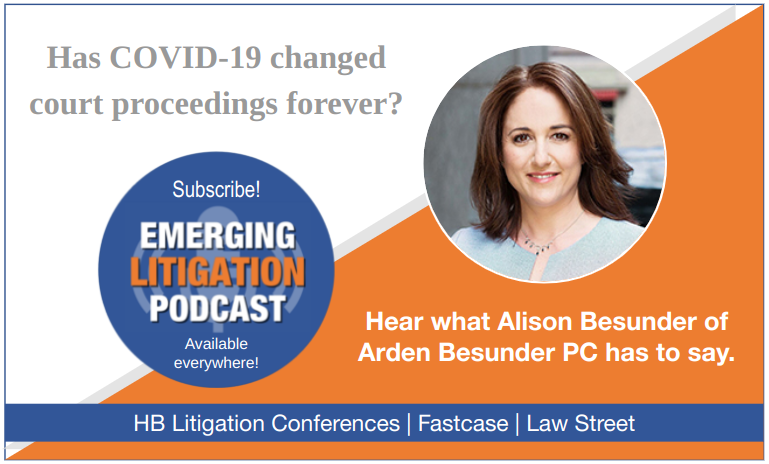
COVID-19 and the Courtroom with Alison Besunder


 When a Medicare beneficiary obtains a prescription drug covered by Medicare, the beneficiary may be required to make a partial payment, which may take the form of a copayment, coinsurance, or a deductible (collectively “copays”). Congress included copay requirements in the Medicare program, in part, to serve as a check on health care costs, including the prices that pharmaceutical manufacturers can demand for their drugs.
“We will continue to hold pharmaceutical companies and specialty pharmacies accountable if they work together to subvert the charitable donation process and violate the prohibition on the payment of kickbacks.”
MoginRubin LLP
Washington, DC | San Diego

OnDemand CLE Webinar: The Antitrust Case Against Google. Dan Mogin, Jonathan Rubin, Jennifer Oliver, Timothy LaComb, John Newman, Dr. Alan Grant
Blog: FTC’s Case Against Facebook Will Test the Flexibility of U.S. Antitrust Law.Authors: Jonathan Rubin and Jennifer Oliver, MoginRubin LLP
Blog: Full Ninth Circuit Removes Unwarranted Hurdles to Class Certification. Jonathan Rubin, Dan Mogin.
Journal: FTC v. Amazon: Market Definitions and Section 5 of the FTC Act
Podcast: Algorithmic Software Facilitated Price Fixing with Jonathan Rubin
This is especially true in antitrust, where industries and markets undergo constant change brought about by innovation and changing consumer behavior. Confronted with ever evolving commercial circumstances, the courts face a constant struggle to keep up. With the filing of the antitrust cases against the Facebook “monopoly” by the Federal Trade Commission and 47 state attorneys general, U.S. antitrust faces one of its most significant tests since the case of U.S. v. Microsoft, now 20 years old.
In the intervening decades, the Internet has spawned a new category of industry, “demand aggregators.” These businesses seek to grow market share not just by capturing supply, but also demand. The power of the dominant digital platforms—Google, Apple, Facebook, Amazon, Uber—arises as much or more from their position as the source of customers than as a supply of goods or services. Of course, the platform must be able to deliver, but when customers view your website as the place to go—Amazon for goods, Uber for rides, Facebook for friends—the supply will follow.
Demand-side dominance is only one of the thorny issues the court will have to resolve in the antitrust authorities’ cases against Facebook …
Read the complete post by antitrust and competition law experts Jonathan Rubin and Jennifer M. Oliver as well as other posts on competition law in the tech space, including commentary on Google, Uber, Amazon, Apple, and more at the MoginRubin Blog.
***
Responses to posts appearing on the HB site, or fresh news and articles, are welcome. Write to Editor@LitigationConferences.com.
An on-demand CLE-eligible webinar Safeguarding Against Financial Exploitation America’s senior population is growing. Nearly one in five U.S. residents will be 65 or older in 2030. Which means the average age of U.S. investors is climbing too. With that comes the risk that they will be exploited by people with access – or gain access through nefarious methods – to their investment portfolio. Seniors and vulnerable persons lose billions of dollars each year. Remarkably, 90% of the people to take advantage of senior investors are members of their own family. Attorneys who represent senior clients need to know the signs of vulnerability, red flags that their clients are being exploited, what laws apply, and rules lawyers must follow in these matters. Questions our speakers answer: What is senior / vulnerable investor exploitation? Who is protected by state and federal laws? How prevalent is senior financial exploitation? What do the numbers tell us? What is the pace of financial abuse SAR filings by securities firms? What are the most popular scams? What is diminished capacity? What are the red flags indicating possible exploitation? What are the laws, rules, and regulations governing law firms? What are some best practices for law firms? How can firms best protect their senior clients? On Demand CLE Webinar What You Get PowerPoint and supplemental materials. Complete recording for later review. Answers to your questions via email. Invitation to contact speakers. 1.5 CLE credits (for licensed attorneys). CLE assistance.* *Subject to state bar rules. For licensed attorneys. Register Meet the Speakers Joseph Calabrese Bressler, Amery & Ross, P.C. A 1991 Graduate of St. John’s University Law School, Mr. Calabrese brings 30 years of practice and 18 years of Securities Litigation/Regulatory experience to his role as principal in the New York office of Bressler, Amery & Ross’s Financial Institutions Group. He began his career as a Wall Street litigator as an associate general counsel for Citigroup’s Smith Barney and […]
Lien Resolution: Government & Private Plans Get Aggressive (Against Attorneys)
Includes Nearly 75 minutes of insights from experienced professionals. CLE credit: 1+ (subject to bar rules). For CLE questions: CLE@LitigationConference.com The complete Power Point presentation. Continued access to the complete recording for later use. Answers to your questions via email to the presenters or write to HB and we will be sure to contact the speakers. What can you do to settle personal injury suits cleanly and avoid costly litigation and penalties? What recent cases can inform you about protecting your settlements and, as attorneys, yourselves, from post-settlement federal lawsuits? How can your firm set itself up to meet government expectations? What role might experts play in navigating these pitfalls? Medicare Advantage (42 USC § 1395w-22) Federal Medical Care Recovery Act (FMCRA) (42 USC § 2651) Armed Forces Act (10 USC §1095) Veterans’ Benefits (38 USC §1729) Third-Party Collection Rules (32 CFR 537.24; 38 CFR 17.101, etc.) Set-Asides under the Medicare Secondary Payer Act (42 USC § 1395y(b)(2)] On Demand Registration Lien Resolution Government & Private Plans Get Aggressive (Against Attorneys!) On Demand | Recorded September 2020 It is increasingly common these days. Personal injury attorneys settle a case, only to find themselves sued by a U.S. Attorney for failing to reimburse Medicare for conditional payments as required by the Medicare Secondary Payer Act. In some cases the attorney may be required to pay fines in addition to the reimbursements and interest, a costly proposition. Are you up to speed on issues surrounding Medicare Advantage, TRICARE, veterans’ claims, and Medicare set-asides? Join nationally recognized healthcare lien and resolution expert Franklin P. Solomon and go-to lien resolution provider Brett Newman as they offer a practical, in-depth CLE presentation. Franklin P. Solomon, Esq. Attorney & Founder, Solomon Law Firm A graduate of Rutgers University School of Law at Camden, Franklin Solomon is based in Cherry Hill, NJ, with a practice focused on evaluation, litigation and resolution of healthcare “liens” and reimbursement claims. Mr. Solomon represents personal injury victims and their attorneys […]
REGISTER Registration Includes Nearly 90 minutes of insights from experienced professionals. CLE credit: 1+ (subject to bar rules). For CLE questions: CLE@LitigationConference.com The complete Power Point presentation. Continued access to the complete recording for later use. Answers to your questions via email to the presenters or write to HB and we will be sure to contact the speakers. Understand the risks associated with telepsychiatry and how to manage them. Telemedicine has emerged as an important solution for healthcare in general and psychiatric medicine specifically during the current global pandemic. Remote access for sub-practices including addiction counseling have been commonly used. Our panel of psychiatric professionals who have served as expert witnesses and attorneys who counsel and represent physicians have prepared a 90-minute session to share insights with attorneys, physicians, healthcare providers, risk professionals, and more. Agenda Examining procedures and best practices that exist for ensuring confidentiality in a telemedicine practice How do you draft a telepsychiatric consent form? What is the emerging standard of care for telemedicine? Will the standard of care for telemedicine become a national standard? (Should it?) Review the case law addressing telemedicine or telepsychiatry How do the HIPAA regulations and HITECH privacy laws impact telemedicine? How have the HIPAA regulations and HITECH privacy laws been relaxed during the pandemic? Will the relaxed HIPAA and HITECH regulations impacting telemedicine continue past the pandemic? Which technical platforms are preferred? Which ones to avoid? Panelists Mark Levy, M.D., Medical Director at fpamed David Kan, M.D., UCSF Psychiatry Department and the California Society for Substance Abuse Medicine Ayesha Ashai, M.D., associated with fpamed Stephen M. Fatum, J.D., Partner, Barnes & Thornburg LLP Angela W. Russell, J.D., Partner, Wilson Elser Moskowitz Edelman & Dicker LLP Meet our physician and attorney panelists. Mark Levy MD Medical Director fpamed Dr. Levy is a graduate of Columbia College (A.B. 1967) and the Columbia University College of Physicians and Surgeons (M.D. 1971) in New York. He is a Physician […]

The Commercial Drone Industry: Privacy, Security, Threats, and Mitigation of Risk
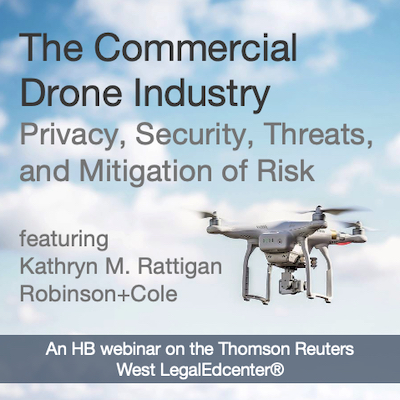
HB presents a CLE-eligible webinar Now on-demand at the West LegalEdcenter THE COMMERCIAL DRONE INDUSTRY Privacy, Security, Threats, and Mitigation of Risk Drones have become an increasingly valuable tool for businesses of all types and sizes. Drones are already being used in many applications, but more will certainly arise as the technology advances. This means that certain risks, like cyber threats, will also continue to present themselves. Protecting the transmission and storage of data collected through drones is critical. Unfortunately, security usually comes as an afterthought. The drone industry is part of the aviation industry, which, based on its knowledge, keeps safety as a number one concern. Part of that safety is having proper protection for your systems, including security as a fundamental design principle. Take this webinar to gain insights on the topics listed below, and shared by an attorney who practices on the cutting-edge of this evolving technology. Topics: Defining drones. Current and future applications. FAA Modernization and Reform Act of 2012. FAA Part 107 Regulations and waivers. Resources, e.g. the FAA Drone Zone and LAANC Portal. Penalties for violations. Privacy implications. Drones as weapons. Vulnerability to cyber attacks. Take it now! What you get: 1+ CLE credits (subject to bar rules). Insights from an experienced professional who specializes in this area of the law. The complete PowerPoint presentation. Continued access to the complete recording for later use. Answers to your questions. Fee: No additional charge to subscribers to the West LegalEdcenter. Non-subscribers may take the course for $170. Meet the Speaker Kathryn Rattigan Robinson & Cole LLP Kathryn Rattigan is a member of the firm’s Business Litigation Group and Data Privacy + Cybersecurity Team. She advises clients on data privacy and security, cybersecurity, and compliance with related state and federal laws. She assists clients in assessing risks related to technology and software contracts, as well as with compliance-related issues with outsourcing and […]
The Intersection of Privacy and Antitrust Webinar Now Available On-Demand on the West LegalEdcenter
Available as part of your subscription to The Thomson Reuters West LegalEdcenter®. Don’t subscribe to the West LegalEdcenter? This webinar is still available directly from HB. Take it now! Questions for speakers Questions@LitigationConferences.com CLE questions CLE@LitigationConferences.com Check out the MoginRubin blog for more insights on antitrust and privacy law. What attorneys and companies need to know about the increasing interplay between these critical areas of the law. Highly publicized cases and investigations in the U.S. and Europe of big technology, e-commerce, and social media companies demonstrate how anti-competition laws are being used to scrutinize and challenge not only how these corporations conduct themselves in the marketplace, but the very core of their colossal success: the mass collection and utilization of user data. Are the privacy and antitrust worlds beginning to cross over? Or do they simply run parallel while addressing entirely different types of conduct? Whatever the answer, data is the raw material that drives the likes of Google, Facebook, Apple and Amazon, so how it is handled is a critical question when counseling clients on mergers and acquisitions. Moderator Daniel J. Mogin | Managing Partner, MoginRubin LLP Speakers Jennifer M. Oliver, CIPP/US | Partner, MoginRubin LLP Thomas N. Dahdouh | Director, Western Region, Federal Trade Commission Franklin M. Rubinstein | Partner, Wilson Sonsini Goodrich & Rosati Randi W. Singer, CIPP/US, CIPT | Partner, Weil, Gotshal & Manges Contributor Dina Srinivasan | Independent Researcher & Author of The Antitrust Case Against Facebook Dina was unable to present but we thank her for her content contributions. Agenda Who should regulate privacy violations in the U.S.? Which antitrust issues implicate privacy concerns? What role does machine learning play on the competitive landscape? What is big data really? How is it different from “data”? What are the elements of effective merger reviews? What are the appropriate remedies? What are “notice-and-choice” versus “harms-based” approaches? Plus answers to your questions. Send them to Questions@LitigationConferences.com.

Editor and Managing Director
HB Litigation Conferences
Editor@LitigationConferences.com
Well-known policyholder and insurance recovery attorney Kirk Pasich and his firm have sued Chubb insurance companies on behalf of policyholders in the entertainment industry to recover millions in losses they suffered as a result of the Covid-19 pandemic.
On Nov. 11, 2020, the firm filed suit on behalf of United Talent Agency LLC in Los Angeles County Superior Court against Vigilant Insurance Co. and Federal Insurance Co. UTA seeks coverage for the millions it lost when concerts and television and movie projections had to be cancelled. The complaint says both carriers are part of the Chubb group, “which has adopted a universal practice of denying coverage for all business interruption claims associated with SARS-CoV-2, Covid-19, and subsequent events” (UTA v. Vigilant, No. 20STCV43745, Calif. Super. Ct., Los Angeles). Acts affected include Post Malone, Guns N’ Roses, and Toby Keith.
The case hinges in part on the carriers’ assertion that there was no “physical loss or damage.” UTA finds Vigilant based its finding on little information, and knowing for decades that “many courts have held that the presence of a hazardous substance on a property, including the airspace inside buildings, constitutes property damage and that there may be ‘direct physical loss’ to property even if the property is not structurally damaged.”
Pasich and his partner Michael S. Gehrt represent UTA.
On Sept. 9, 2020, motion picture production company Hoosegow (Hypnotic) Productions Inc. sued Chubb National Insurance Company in federal court in California, arguing that the carrier breached its agreement to extend coverage for the film, titled Hypnotic starring actors including Ben Afleck, should production be delayed.
When Covid-19 hit and stopped production, Chubb, instead of extending the policy, cancelled it and offered to renew it with a Covid-19 exclusion. This is a “material reduction in the scope of the insurance,” the complaint states (Hoosegow v. Chubb National, No. 2:20-cv-08253, C.D. Calif.).
“Chubb National’s conduct is despicable,” the complaint continues, “and has been done with a conscious disregard of Hoosegow’s rights, constituting oppression, fraud, and/or malice.” The production company claims substantial financial losses due to the carrier’s “intent to injure,” justifying an award of punitive damages. Breach of contract, bad faith, fraudulent promise without intent to perform, fraud in the inducement, negligent misrepresentation, and fraudulent reformation of the contract are among the claims brought against the carrier.
Pasich and his colleague Jacquelyn M. Mohr represent Hoosegow.
Chubb CEO Evan Greenberg reportedly said on an earnings call this summer that plaintiff attorneys are “attempting to torture or reverse engineer insurance contract language to conjure up business interruption coverage that for the most part simply doesn’t exist.”
Responses, news and articles are welcome. Write to Editor@LitigationConferences.com.
An on-demand CLE-eligible webinar Safeguarding Against Financial Exploitation America’s senior population is growing. Nearly one in five U.S. residents will be 65 or older in 2030. Which means the average age of U.S. investors is climbing too. With that comes the risk that they will be exploited by people with access – or gain access through nefarious methods – to their investment portfolio. Seniors and vulnerable persons lose billions of dollars each year. Remarkably, 90% of the people to take advantage of senior investors are members of their own family. Attorneys who represent senior clients need to know the signs of vulnerability, red flags that their clients are being exploited, what laws apply, and rules lawyers must follow in these matters. Questions our speakers answer: What is senior / vulnerable investor exploitation? Who is protected by state and federal laws? How prevalent is senior financial exploitation? What do the numbers tell us? What is the pace of financial abuse SAR filings by securities firms? What are the most popular scams? What is diminished capacity? What are the red flags indicating possible exploitation? What are the laws, rules, and regulations governing law firms? What are some best practices for law firms? How can firms best protect their senior clients? On Demand CLE Webinar What You Get PowerPoint and supplemental materials. Complete recording for later review. Answers to your questions via email. Invitation to contact speakers. 1.5 CLE credits (for licensed attorneys). CLE assistance.* *Subject to state bar rules. For licensed attorneys. Register Meet the Speakers Joseph Calabrese Bressler, Amery & Ross, P.C. A 1991 Graduate of St. John’s University Law School, Mr. Calabrese brings 30 years of practice and 18 years of Securities Litigation/Regulatory experience to his role as principal in the New York office of Bressler, Amery & Ross’s Financial Institutions Group. He began his career as a Wall Street litigator as an associate general counsel for Citigroup’s Smith Barney and […]
Lien Resolution: Government & Private Plans Get Aggressive (Against Attorneys)
Includes Nearly 75 minutes of insights from experienced professionals. CLE credit: 1+ (subject to bar rules). For CLE questions: CLE@LitigationConference.com The complete Power Point presentation. Continued access to the complete recording for later use. Answers to your questions via email to the presenters or write to HB and we will be sure to contact the speakers. What can you do to settle personal injury suits cleanly and avoid costly litigation and penalties? What recent cases can inform you about protecting your settlements and, as attorneys, yourselves, from post-settlement federal lawsuits? How can your firm set itself up to meet government expectations? What role might experts play in navigating these pitfalls? Medicare Advantage (42 USC § 1395w-22) Federal Medical Care Recovery Act (FMCRA) (42 USC § 2651) Armed Forces Act (10 USC §1095) Veterans’ Benefits (38 USC §1729) Third-Party Collection Rules (32 CFR 537.24; 38 CFR 17.101, etc.) Set-Asides under the Medicare Secondary Payer Act (42 USC § 1395y(b)(2)] On Demand Registration Lien Resolution Government & Private Plans Get Aggressive (Against Attorneys!) On Demand | Recorded September 2020 It is increasingly common these days. Personal injury attorneys settle a case, only to find themselves sued by a U.S. Attorney for failing to reimburse Medicare for conditional payments as required by the Medicare Secondary Payer Act. In some cases the attorney may be required to pay fines in addition to the reimbursements and interest, a costly proposition. Are you up to speed on issues surrounding Medicare Advantage, TRICARE, veterans’ claims, and Medicare set-asides? Join nationally recognized healthcare lien and resolution expert Franklin P. Solomon and go-to lien resolution provider Brett Newman as they offer a practical, in-depth CLE presentation. Franklin P. Solomon, Esq. Attorney & Founder, Solomon Law Firm A graduate of Rutgers University School of Law at Camden, Franklin Solomon is based in Cherry Hill, NJ, with a practice focused on evaluation, litigation and resolution of healthcare “liens” and reimbursement claims. Mr. Solomon represents personal injury victims and their attorneys […]
REGISTER Registration Includes Nearly 90 minutes of insights from experienced professionals. CLE credit: 1+ (subject to bar rules). For CLE questions: CLE@LitigationConference.com The complete Power Point presentation. Continued access to the complete recording for later use. Answers to your questions via email to the presenters or write to HB and we will be sure to contact the speakers. Understand the risks associated with telepsychiatry and how to manage them. Telemedicine has emerged as an important solution for healthcare in general and psychiatric medicine specifically during the current global pandemic. Remote access for sub-practices including addiction counseling have been commonly used. Our panel of psychiatric professionals who have served as expert witnesses and attorneys who counsel and represent physicians have prepared a 90-minute session to share insights with attorneys, physicians, healthcare providers, risk professionals, and more. Agenda Examining procedures and best practices that exist for ensuring confidentiality in a telemedicine practice How do you draft a telepsychiatric consent form? What is the emerging standard of care for telemedicine? Will the standard of care for telemedicine become a national standard? (Should it?) Review the case law addressing telemedicine or telepsychiatry How do the HIPAA regulations and HITECH privacy laws impact telemedicine? How have the HIPAA regulations and HITECH privacy laws been relaxed during the pandemic? Will the relaxed HIPAA and HITECH regulations impacting telemedicine continue past the pandemic? Which technical platforms are preferred? Which ones to avoid? Panelists Mark Levy, M.D., Medical Director at fpamed David Kan, M.D., UCSF Psychiatry Department and the California Society for Substance Abuse Medicine Ayesha Ashai, M.D., associated with fpamed Stephen M. Fatum, J.D., Partner, Barnes & Thornburg LLP Angela W. Russell, J.D., Partner, Wilson Elser Moskowitz Edelman & Dicker LLP Meet our physician and attorney panelists. Mark Levy MD Medical Director fpamed Dr. Levy is a graduate of Columbia College (A.B. 1967) and the Columbia University College of Physicians and Surgeons (M.D. 1971) in New York. He is a Physician […]
The Commercial Drone Industry: Privacy, Security, Threats, and Mitigation of Risk
HB presents a CLE-eligible webinar Now on-demand at the West LegalEdcenter THE COMMERCIAL DRONE INDUSTRY Privacy, Security, Threats, and Mitigation of Risk Drones have become an increasingly valuable tool for businesses of all types and sizes. Drones are already being used in many applications, but more will certainly arise as the technology advances. This means that certain risks, like cyber threats, will also continue to present themselves. Protecting the transmission and storage of data collected through drones is critical. Unfortunately, security usually comes as an afterthought. The drone industry is part of the aviation industry, which, based on its knowledge, keeps safety as a number one concern. Part of that safety is having proper protection for your systems, including security as a fundamental design principle. Take this webinar to gain insights on the topics listed below, and shared by an attorney who practices on the cutting-edge of this evolving technology. Topics: Defining drones. Current and future applications. FAA Modernization and Reform Act of 2012. FAA Part 107 Regulations and waivers. Resources, e.g. the FAA Drone Zone and LAANC Portal. Penalties for violations. Privacy implications. Drones as weapons. Vulnerability to cyber attacks. Take it now! What you get: 1+ CLE credits (subject to bar rules). Insights from an experienced professional who specializes in this area of the law. The complete PowerPoint presentation. Continued access to the complete recording for later use. Answers to your questions. Fee: No additional charge to subscribers to the West LegalEdcenter. Non-subscribers may take the course for $170. Meet the Speaker Kathryn Rattigan Robinson & Cole LLP Kathryn Rattigan is a member of the firm’s Business Litigation Group and Data Privacy + Cybersecurity Team. She advises clients on data privacy and security, cybersecurity, and compliance with related state and federal laws. She assists clients in assessing risks related to technology and software contracts, as well as with compliance-related issues with outsourcing and […]
The Intersection of Privacy and Antitrust Webinar Now Available On-Demand on the West LegalEdcenter
Available as part of your subscription to The Thomson Reuters West LegalEdcenter®. Don’t subscribe to the West LegalEdcenter? This webinar is still available directly from HB. Take it now! Questions for speakers Questions@LitigationConferences.com CLE questions CLE@LitigationConferences.com Check out the MoginRubin blog for more insights on antitrust and privacy law. What attorneys and companies need to know about the increasing interplay between these critical areas of the law. Highly publicized cases and investigations in the U.S. and Europe of big technology, e-commerce, and social media companies demonstrate how anti-competition laws are being used to scrutinize and challenge not only how these corporations conduct themselves in the marketplace, but the very core of their colossal success: the mass collection and utilization of user data. Are the privacy and antitrust worlds beginning to cross over? Or do they simply run parallel while addressing entirely different types of conduct? Whatever the answer, data is the raw material that drives the likes of Google, Facebook, Apple and Amazon, so how it is handled is a critical question when counseling clients on mergers and acquisitions. Moderator Daniel J. Mogin | Managing Partner, MoginRubin LLP Speakers Jennifer M. Oliver, CIPP/US | Partner, MoginRubin LLP Thomas N. Dahdouh | Director, Western Region, Federal Trade Commission Franklin M. Rubinstein | Partner, Wilson Sonsini Goodrich & Rosati Randi W. Singer, CIPP/US, CIPT | Partner, Weil, Gotshal & Manges Contributor Dina Srinivasan | Independent Researcher & Author of The Antitrust Case Against Facebook Dina was unable to present but we thank her for her content contributions. Agenda Who should regulate privacy violations in the U.S.? Which antitrust issues implicate privacy concerns? What role does machine learning play on the competitive landscape? What is big data really? How is it different from “data”? What are the elements of effective merger reviews? What are the appropriate remedies? What are “notice-and-choice” versus “harms-based” approaches? Plus answers to your questions. Send them to Questions@LitigationConferences.com.
The Antitrust Case Against Google
 The U.S. Department of Justice and 11 states have filed a sweeping antitrust suit against Google alleging the tech giant abuses its position as “monopoly gatekeeper for the internet” to block competitors. The complaint says Google has used anticompetitive tactics to maintain and extend its monopolies in the markets for general search services, search advertising, and general search text advertising.
The federal and state governments charge Google uses “exclusionary agreements, including tying arrangements” to “lock up distribution channels and block rivals.” Google’s considerable wealth helps make this happen. Google pays billions of dollars a year to distributors to secure their position as the default search engine, and prohibits these companies from dealing with Google competitors. Google’s exclusionary strategy is being applied more harshly in newer technologies, such as voice assistants, and in its goal of dominating other platforms in the IoT category, such as smart speakers, home appliances, and autonomous cars.
Without a court order, the government plaintiffs say, “Google will continue executing its anticompetitive strategy, crippling the competitive process, reducing consumer choice, and stifling competition.”
What does all of this mean to actual or potential rivals, ad buyers, consumer, developers, and device makers in three markets Search Service, Search Advertising, and Search Text Advertising? What type of defense might Google mount? What might the ultimate resolution look like?
Join our panel, led by competition law thought leaders, as they address the potential impact of the litigation and answer your questions via live chat.
• Setting the stage: What constitutes an illegal monopoly?
• Lessons from United States v. Microsoft?
• How does the government define the three markets?
• What is in the alleged exclusionary agreements and tying arrangements?
• What does the government allege is improper about Google default settings?
• Why is requiring app bundles on devices considered improper in this case?
• Which companies is Google allegedly harming and how?
• What does Google’s immediate response tell us?
• Will private antitrust actions follow the government’s suit?
Interested in this topic? Contact Tom Hagy for more information.
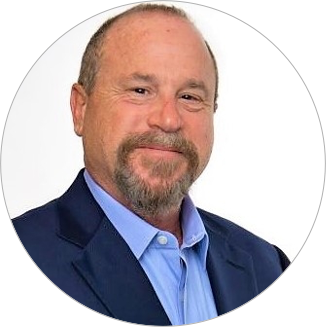
Read more about Dan Mogin or email him at DMogin@MoginRubin.com.
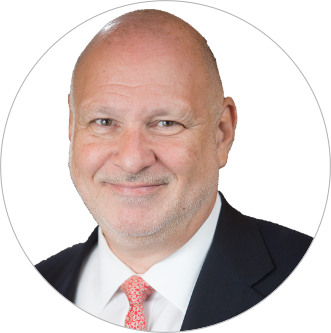
Read more about Jonathan Rubin or email him at JRubin@MoginRubin.com.
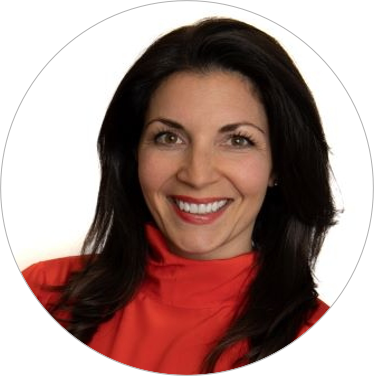
Read more about Jennifer Oliver or email her at JOliver@MoginRubin.com.

Read more about Tim LaComb or email him at TLaComb@MoginRubin.com.

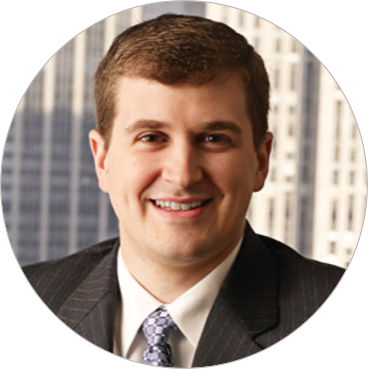
OnDemand CLE Webinar: The Antitrust Case Against Google. Dan Mogin, Jonathan Rubin, Jennifer Oliver, Timothy LaComb, John Newman, Dr. Alan Grant
Blog: FTC’s Case Against Facebook Will Test the Flexibility of U.S. Antitrust Law.Authors: Jonathan Rubin and Jennifer Oliver, MoginRubin LLP
Blog: Full Ninth Circuit Removes Unwarranted Hurdles to Class Certification.
Journal: FTC v. Amazon: Market Definitions and Section 5 of the FTC Act
Podcast: Algorithmic Software Facilitated Price Fixing with Jonathan Rubin
Jennifer Oliver, an antitrust attorney and a certified privacy professional, kicked off the webinar with some background for those of you less familiar with antitrust. Here is a recap of what she had to say.
Section 7 of the Clayton Act prohibits mergers whose effect may be to substantially lessen competition or to tend to create a monopoly. Most Section 7 suits are filed by the government or private plaintiffs seeking to prevent damage to competition before the damage happens. While there is no allegation of violation of Section 7 in U.S. v. Google, many would argue that Google’s earlier acquisitions have harmed competition or quashed nascent competitors and should have been examined more closely.
The Sherman Act, part of which is implicated in the Google case, is more familiar to attorneys and businesspeople.
Section 2 of the Sherman Act, which is most relevant to U.S. v. Google, says you cannot monopolize or attempt to monopolize a line of interstate commerce through anti-competitive conduct. Contrary to a common misconception, monopolies are not per se illegal which, if you think about it, makes sense: If you invent a new product, you have 100% of the market for that product. Competitors will follow. But the fact of monopolizing a market is not in itself illegal. What is illegal is acquiring or maintaining that monopoly in a defined “relevant market” through anti-competitive conduct. Monopoly power is often measured in terms of the ability to control prices in the relevant market, or to exclude competitors in that market, which often means that smaller rivals can’t reach scale or can’t exercise any sort of price discipline over the monopolist.
How do we define the relevant market? That is an art onto itself in antitrust law, but you must define both product and geographic markets to successfully allege a monopoly exists. The concept of “product substitutes” is very important here, e.g., Would consumers be able to switch to another product if the alleged monopolist raised its prices or otherwise harmed consumers, for example through diminished quality or privacy?
Next we ask whether anticompetitive conduct was used to obtain a monopoly, and/or whether anticompetitive conduct is ongoing to maintain a monopoly. A monopolist may achieve its dominance illegally, while not maintaining its status through anticompetitive conduct, or vice versa. The relevant statutes are very broad and are open to judicial interpretation. Much of the conduct in modern monopolization cases occurs in new markets that didn’t exist when the laws were written. Internet search engines and digital advertising are perfect examples.
While anticompetitive conduct is not explicitly defined by Section 2 of the Sherman Act, caselaw offers examples, including exercising the power to engage in conduct that raises a rival’s costs and pricing below cost to drive rivals out of business.
These are key questions in U.S. v. Google. Does Google have monopoly power, has the relevant market been defined, and has it engaged in anticompetitive conduct? The panel discusses these issues and more.
By Dan Mogin, Jonathan Rubin, Jennifer M. Oliver, and Timothy Z. LaComb
Podcast: Algorithmic Software Facilitated Price Fixing with Jonathan Rubin
OnDemand CLE Webinar: The Antitrust Case Against Google. Speakers Dan Mogin, Jonathan Rubin, Jennifer Oliver, Timothy LaComb, John Newman, Dr. Alan Grant
OnDemand CLE Webinar: Class Certification After Olean v. Bumble Bee, Jonathan Rubin, James Bogan, Jonathan Cohn, Bradley Hamburger
At a conference earlier this year on the Committee on Foreign Investment in the United States, or CFIUS, Assistant Treasury Secretary Thomas P. Feddo spoke with pride of the Committee’s increased funding, jurisdiction, expenditures, and more aggressive review activities.
Feddo began the speech by detailing how CFIUS has implemented the 2018 Foreign Investment Risk Review Modernization Act, or FIRMMA, which expanded its jurisdiction and increased its funding. The Committee has invested in new IT infrastructure and personnel, and since May of this year, the Treasury Department has been collecting filing fees for voluntary filers, a new policy which creates a funding mechanism to supplement its budget.
Feddo went on to discuss new rulemaking around foreign investment, including a proposed rule that would force any transaction to be filed with the Committee “if the foreign acquirer would need export control authorization to transfer the U.S. business’s products or technology to its home country.”1
Another topic was the Committee’s increased vigilance when it comes to monitoring and enforcement, noting an “unprecedented civil monetary penalty of $1,000,000 for repeated breaches of a 2016 CFIUS mitigation agreement, including failure to establish requisite security policies and failure to provide adequate reports to CFIUS.”
This fits with a recent trend in screening older cases that has been noted by journalist Jeanne Whalen of The Washington Post. In her Sept. 29, 2020, article, Whalen quoted Stephen Heifetz, a lawyer at Wilson Sonsini, as saying: “We’ve heard about matters going back almost 10 years. Historically, it was unusual for [CFIUS] to reach back more than three years. But there is in theory no time limitation, and we are increasingly hearing about long reach-back periods.”
CFIUS and national security figured prominently in President Trump’s order demanding that China’s ByteDance unwind its acquisition of TikTok. “While this executive order is one of a few seen under CFIUS, and only the fourth to unwind a completed transaction, it may be a harbinger,” we wrote in our Aug. 18, 2020 post. “Parties and counsel working on international deals must be acutely aware: this committee considers personal data a serious national security issue. It can and will block or unwind tech deals that give foreign access to Americans’ personal information.” See POTUS Uses CFIUS to Unwind TikTok Deal, Fears Chinese Government Will Get Americans’ Private Data by Dan Mogin and Jennifer M. Oliver.
As the headline of The Washington Post article said, “TikTok was just the beginning …”
An on-demand CLE-eligible webinar Safeguarding Against Financial Exploitation America’s senior population is growing. Nearly one in five U.S. residents will be 65 or older in 2030. Which means the average age of U.S. investors is climbing too. With that comes the risk that they will be exploited by people with access – or gain access through nefarious methods – to their investment portfolio. Seniors and vulnerable persons lose billions of dollars each year. Remarkably, 90% of the people to take advantage of senior investors are members of their own family. Attorneys who represent senior clients need to know the signs of vulnerability, red flags that their clients are being exploited, what laws apply, and rules lawyers must follow in these matters. Questions our speakers answer: What is senior / vulnerable investor exploitation? Who is protected by state and federal laws? How prevalent is senior financial exploitation? What do the numbers tell us? What is the pace of financial abuse SAR filings by securities firms? What are the most popular scams? What is diminished capacity? What are the red flags indicating possible exploitation? What are the laws, rules, and regulations governing law firms? What are some best practices for law firms? How can firms best protect their senior clients? On Demand CLE Webinar What You Get PowerPoint and supplemental materials. Complete recording for later review. Answers to your questions via email. Invitation to contact speakers. 1.5 CLE credits (for licensed attorneys). CLE assistance.* *Subject to state bar rules. For licensed attorneys. Register Meet the Speakers Joseph Calabrese Bressler, Amery & Ross, P.C. A 1991 Graduate of St. John’s University Law School, Mr. Calabrese brings 30 years of practice and 18 years of Securities Litigation/Regulatory experience to his role as principal in the New York office of Bressler, Amery & Ross’s Financial Institutions Group. He began his career as a Wall Street litigator as an associate general counsel for Citigroup’s Smith Barney and […]
Lien Resolution: Government & Private Plans Get Aggressive (Against Attorneys)
Includes Nearly 75 minutes of insights from experienced professionals. CLE credit: 1+ (subject to bar rules). For CLE questions: CLE@LitigationConference.com The complete Power Point presentation. Continued access to the complete recording for later use. Answers to your questions via email to the presenters or write to HB and we will be sure to contact the speakers. What can you do to settle personal injury suits cleanly and avoid costly litigation and penalties? What recent cases can inform you about protecting your settlements and, as attorneys, yourselves, from post-settlement federal lawsuits? How can your firm set itself up to meet government expectations? What role might experts play in navigating these pitfalls? Medicare Advantage (42 USC § 1395w-22) Federal Medical Care Recovery Act (FMCRA) (42 USC § 2651) Armed Forces Act (10 USC §1095) Veterans’ Benefits (38 USC §1729) Third-Party Collection Rules (32 CFR 537.24; 38 CFR 17.101, etc.) Set-Asides under the Medicare Secondary Payer Act (42 USC § 1395y(b)(2)] On Demand Registration Lien Resolution Government & Private Plans Get Aggressive (Against Attorneys!) On Demand | Recorded September 2020 It is increasingly common these days. Personal injury attorneys settle a case, only to find themselves sued by a U.S. Attorney for failing to reimburse Medicare for conditional payments as required by the Medicare Secondary Payer Act. In some cases the attorney may be required to pay fines in addition to the reimbursements and interest, a costly proposition. Are you up to speed on issues surrounding Medicare Advantage, TRICARE, veterans’ claims, and Medicare set-asides? Join nationally recognized healthcare lien and resolution expert Franklin P. Solomon and go-to lien resolution provider Brett Newman as they offer a practical, in-depth CLE presentation. Franklin P. Solomon, Esq. Attorney & Founder, Solomon Law Firm A graduate of Rutgers University School of Law at Camden, Franklin Solomon is based in Cherry Hill, NJ, with a practice focused on evaluation, litigation and resolution of healthcare “liens” and reimbursement claims. Mr. Solomon represents personal injury victims and their attorneys […]
REGISTER Registration Includes Nearly 90 minutes of insights from experienced professionals. CLE credit: 1+ (subject to bar rules). For CLE questions: CLE@LitigationConference.com The complete Power Point presentation. Continued access to the complete recording for later use. Answers to your questions via email to the presenters or write to HB and we will be sure to contact the speakers. Understand the risks associated with telepsychiatry and how to manage them. Telemedicine has emerged as an important solution for healthcare in general and psychiatric medicine specifically during the current global pandemic. Remote access for sub-practices including addiction counseling have been commonly used. Our panel of psychiatric professionals who have served as expert witnesses and attorneys who counsel and represent physicians have prepared a 90-minute session to share insights with attorneys, physicians, healthcare providers, risk professionals, and more. Agenda Examining procedures and best practices that exist for ensuring confidentiality in a telemedicine practice How do you draft a telepsychiatric consent form? What is the emerging standard of care for telemedicine? Will the standard of care for telemedicine become a national standard? (Should it?) Review the case law addressing telemedicine or telepsychiatry How do the HIPAA regulations and HITECH privacy laws impact telemedicine? How have the HIPAA regulations and HITECH privacy laws been relaxed during the pandemic? Will the relaxed HIPAA and HITECH regulations impacting telemedicine continue past the pandemic? Which technical platforms are preferred? Which ones to avoid? Panelists Mark Levy, M.D., Medical Director at fpamed David Kan, M.D., UCSF Psychiatry Department and the California Society for Substance Abuse Medicine Ayesha Ashai, M.D., associated with fpamed Stephen M. Fatum, J.D., Partner, Barnes & Thornburg LLP Angela W. Russell, J.D., Partner, Wilson Elser Moskowitz Edelman & Dicker LLP Meet our physician and attorney panelists. Mark Levy MD Medical Director fpamed Dr. Levy is a graduate of Columbia College (A.B. 1967) and the Columbia University College of Physicians and Surgeons (M.D. 1971) in New York. He is a Physician […]
The Commercial Drone Industry: Privacy, Security, Threats, and Mitigation of Risk
HB presents a CLE-eligible webinar Now on-demand at the West LegalEdcenter THE COMMERCIAL DRONE INDUSTRY Privacy, Security, Threats, and Mitigation of Risk Drones have become an increasingly valuable tool for businesses of all types and sizes. Drones are already being used in many applications, but more will certainly arise as the technology advances. This means that certain risks, like cyber threats, will also continue to present themselves. Protecting the transmission and storage of data collected through drones is critical. Unfortunately, security usually comes as an afterthought. The drone industry is part of the aviation industry, which, based on its knowledge, keeps safety as a number one concern. Part of that safety is having proper protection for your systems, including security as a fundamental design principle. Take this webinar to gain insights on the topics listed below, and shared by an attorney who practices on the cutting-edge of this evolving technology. Topics: Defining drones. Current and future applications. FAA Modernization and Reform Act of 2012. FAA Part 107 Regulations and waivers. Resources, e.g. the FAA Drone Zone and LAANC Portal. Penalties for violations. Privacy implications. Drones as weapons. Vulnerability to cyber attacks. Take it now! What you get: 1+ CLE credits (subject to bar rules). Insights from an experienced professional who specializes in this area of the law. The complete PowerPoint presentation. Continued access to the complete recording for later use. Answers to your questions. Fee: No additional charge to subscribers to the West LegalEdcenter. Non-subscribers may take the course for $170. Meet the Speaker Kathryn Rattigan Robinson & Cole LLP Kathryn Rattigan is a member of the firm’s Business Litigation Group and Data Privacy + Cybersecurity Team. She advises clients on data privacy and security, cybersecurity, and compliance with related state and federal laws. She assists clients in assessing risks related to technology and software contracts, as well as with compliance-related issues with outsourcing and […]
The Intersection of Privacy and Antitrust Webinar Now Available On-Demand on the West LegalEdcenter
Available as part of your subscription to The Thomson Reuters West LegalEdcenter®. Don’t subscribe to the West LegalEdcenter? This webinar is still available directly from HB. Take it now! Questions for speakers Questions@LitigationConferences.com CLE questions CLE@LitigationConferences.com Check out the MoginRubin blog for more insights on antitrust and privacy law. What attorneys and companies need to know about the increasing interplay between these critical areas of the law. Highly publicized cases and investigations in the U.S. and Europe of big technology, e-commerce, and social media companies demonstrate how anti-competition laws are being used to scrutinize and challenge not only how these corporations conduct themselves in the marketplace, but the very core of their colossal success: the mass collection and utilization of user data. Are the privacy and antitrust worlds beginning to cross over? Or do they simply run parallel while addressing entirely different types of conduct? Whatever the answer, data is the raw material that drives the likes of Google, Facebook, Apple and Amazon, so how it is handled is a critical question when counseling clients on mergers and acquisitions. Moderator Daniel J. Mogin | Managing Partner, MoginRubin LLP Speakers Jennifer M. Oliver, CIPP/US | Partner, MoginRubin LLP Thomas N. Dahdouh | Director, Western Region, Federal Trade Commission Franklin M. Rubinstein | Partner, Wilson Sonsini Goodrich & Rosati Randi W. Singer, CIPP/US, CIPT | Partner, Weil, Gotshal & Manges Contributor Dina Srinivasan | Independent Researcher & Author of The Antitrust Case Against Facebook Dina was unable to present but we thank her for her content contributions. Agenda Who should regulate privacy violations in the U.S.? Which antitrust issues implicate privacy concerns? What role does machine learning play on the competitive landscape? What is big data really? How is it different from “data”? What are the elements of effective merger reviews? What are the appropriate remedies? What are “notice-and-choice” versus “harms-based” approaches? Plus answers to your questions. Send them to Questions@LitigationConferences.com.
HBLC · HBPC Charlie Kingdollar Social Disparagement – 10:8:20, 7.57 PM
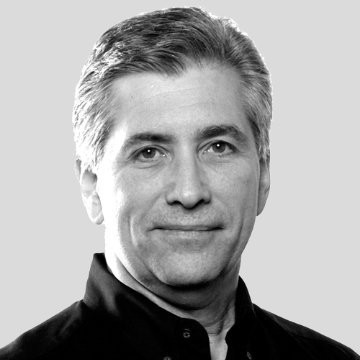
Charlie KingdollarEmerging Issues Professional
Charlie Kingdollar spent more than four decades with General Reinsurance, three-quarters of which as the company’s Emerging Issues Officer. One colleague described him as “one of the most prescient and gifted industry futurists I have met in my 36 year professional career within the insurance industry. Entertaining and insightful, his ability to digest and communicate complex issues, many before they are readily apparent, is both a gift and a talent.” Follow him on LinkedIn.
Are the risks posed by social media — which has added jet fuel to one person’s ability to smear another — adequately addressed by the insurance market?
It was my pleasure to interview Charlie for our first emerging issues podcast. It’s based on his article on social disparagement which will be featured in the inaugural issue of the Journal on Emerging Issues in Litigation (JEIL), which will release in January 2021. JEIL is a collaborative project between HB and the Fastcase legal research family, which includes Full Court Press, Law Street Media, Docket Alarm and, most recently, Judicata. If you have comments or wish to participate in one our projects, or want to tell me how awesome Charlie is, drop me a note at Question@LitigationConferences.com.
We hope you enjoy the interview.
Tom Hagy
Founder & Managing Director
HB Litigation Conferences

 According to a recent Visual Capitalist article, there are now more than 5,000 cryptocurrencies in circulation, fueling an exploding $200 billion industry. Clearly it is a boom time for virtual asset service providers, or VASPs, like cryptocurrency exchanges and wallet providers. Despite its notoriety, mystique still surrounds cryptocurrency, from its use of blockchain technology, to the benefits and weaknesses of trading decentralized money, to national security implications. With crypto’s rise comes global implications. Its use often makes its way into headlines about criminal activity, such as the recent arrest of a 19-year-old and his friends for their alleged roles in a highly publicized Twitter hack. Forensic tools are in a constant state of development. For example, blockchain analysis tools assisted investigators in quickly identifying the young Twitter hackers, according to a post on the CipherTrace blog.
There are many upsides to cryptocurrency. Transactions are secure without bank oversight. They can be processed at any time, not just during business hours. It has purchase power anywhere. Finally, cryptocurrency may provide greater benefit to developing countries where the local currency may swing due to exchange rate instability. In such countries, and where many citizens may be unbanked, supplanting traditional coinage with cryptocurrency could stabilize finance and open its doors to many.
With crypto’s rise comes global implications. Shortcomings generally are human ones; intermediaries, like unregulated exchanges, create vulnerabilities. The ability to use pseudonyms in executing crypto transactions makes it ideal for bad actors, criminal syndicates, and terrorists. According to the international Financial Action Task Force, the risk of money laundering and terrorism financing is increased through “chain-hopping,” or “quick exchanges between different virtual assets,” which “allows the multiple layering of illicit funds within a short timeframe, allowing money laundering networks to disguise the origins of funds and launder illicit proceeds.” Some countries, like Venezuela, have even tried to use cryptocurrency to circumvent sanctions.
Financial losses from criminal activity in this space are climbing. According to the CipherTrace Crytocurrency Crime & Anti-Money Laundering Report, Spring 2020, “In the first five months of 2020, crypto thefts, hacks, and frauds totaled $1.36 billion, suggesting 2020 could see the second-highest value in crypto crimes ever recorded. In a trend that continues from last year, fraud and misappropriation still make up most of the year’s stolen crypto compared to hacks and thefts. Of the $1.36 billion stolen, fraud and misappropriation account for 98% of the total value—nearly $1.3 billion.”
This fast-changing technology is sometimes outpacing law enforcement agencies and the intelligence community, challenging their ability to detect, monitor, and stop cybercrime. But criminals have no reason to rest easy. A former stockbroker recently learned that the hard way. Following a multi-agency federal investigation, he quickly pleaded guilty to running a $33 million cryptocurrency scam.
 This excellent program features blockchain expert Dina Mainville with CipherTrace, plus attorneys and former federal prosecutors David Haas of Haas Law PLLC, and Dan Eckhart with Dan Eckhart Law. The webinar is hosted by Sarah Hargreaves, who directs training internationally for AccessData, provider of digital forensics software solutions for law enforcement and government agencies.
Senior Life Sciences
Policy Analyst
Reed Smith LLP


 We’ll be very clear – as we have before: We don’t like most class actions. Indeed, if given our druthers, we would abolish Rule 23, as it applies to class actions for damages, altogether. But that’s not in the offing anytime soon. Today, we offer a class action decision that we think both sides, us on the defense and those on the plaintiffs side, can agree on, excluding only those responsible for the problem.
In Pearson v. Target Corp., 968 F.3d 827 (7th Cir. 2020), the court came up with one possible solution to the class action “objector problem.”
What’s that?
Well, once a class action settles (as most do), all too often “objectors” come out of the woodwork. While these objectors purport to assert the interests of the class, usually, all they want is money to make them go away. Or, as described in Pearson:
We address here a recurring problem in class-action litigation known colloquially as “objector blackmail.” The scenario is familiar to class-action litigators on both offense and defense. A plaintiff class and a defendant submit a proposed settlement for approval by the district court. A few class members object to the settlement but the court approves it. . . . The objectors then file appeals. As it turns out, though, they are willing to abandon their appeals in return for sizable side payments that do not benefit the plaintiff class: a figurative “blackmail” by selfish holdouts threatening to disrupt collective action unless they are paid off.
…
Read more at the Drug & Device Defense Law Blog.
An on-demand CLE-eligible webinar Safeguarding Against Financial Exploitation America’s senior population is growing. Nearly one in five U.S. residents will be 65 or older in 2030. Which means the average age of U.S. investors is climbing too. With that comes the risk that they will be exploited by people with access – or gain access through nefarious methods – to their investment portfolio. Seniors and vulnerable persons lose billions of dollars each year. Remarkably, 90% of the people to take advantage of senior investors are members of their own family. Attorneys who represent senior clients need to know the signs of vulnerability, red flags that their clients are being exploited, what laws apply, and rules lawyers must follow in these matters. Questions our speakers answer: What is senior / vulnerable investor exploitation? Who is protected by state and federal laws? How prevalent is senior financial exploitation? What do the numbers tell us? What is the pace of financial abuse SAR filings by securities firms? What are the most popular scams? What is diminished capacity? What are the red flags indicating possible exploitation? What are the laws, rules, and regulations governing law firms? What are some best practices for law firms? How can firms best protect their senior clients? On Demand CLE Webinar What You Get PowerPoint and supplemental materials. Complete recording for later review. Answers to your questions via email. Invitation to contact speakers. 1.5 CLE credits (for licensed attorneys). CLE assistance.* *Subject to state bar rules. For licensed attorneys. Register Meet the Speakers Joseph Calabrese Bressler, Amery & Ross, P.C. A 1991 Graduate of St. John’s University Law School, Mr. Calabrese brings 30 years of practice and 18 years of Securities Litigation/Regulatory experience to his role as principal in the New York office of Bressler, Amery & Ross’s Financial Institutions Group. He began his career as a Wall Street litigator as an associate general counsel for Citigroup’s Smith Barney and […]
Lien Resolution: Government & Private Plans Get Aggressive (Against Attorneys)
Includes Nearly 75 minutes of insights from experienced professionals. CLE credit: 1+ (subject to bar rules). For CLE questions: CLE@LitigationConference.com The complete Power Point presentation. Continued access to the complete recording for later use. Answers to your questions via email to the presenters or write to HB and we will be sure to contact the speakers. What can you do to settle personal injury suits cleanly and avoid costly litigation and penalties? What recent cases can inform you about protecting your settlements and, as attorneys, yourselves, from post-settlement federal lawsuits? How can your firm set itself up to meet government expectations? What role might experts play in navigating these pitfalls? Medicare Advantage (42 USC § 1395w-22) Federal Medical Care Recovery Act (FMCRA) (42 USC § 2651) Armed Forces Act (10 USC §1095) Veterans’ Benefits (38 USC §1729) Third-Party Collection Rules (32 CFR 537.24; 38 CFR 17.101, etc.) Set-Asides under the Medicare Secondary Payer Act (42 USC § 1395y(b)(2)] On Demand Registration Lien Resolution Government & Private Plans Get Aggressive (Against Attorneys!) On Demand | Recorded September 2020 It is increasingly common these days. Personal injury attorneys settle a case, only to find themselves sued by a U.S. Attorney for failing to reimburse Medicare for conditional payments as required by the Medicare Secondary Payer Act. In some cases the attorney may be required to pay fines in addition to the reimbursements and interest, a costly proposition. Are you up to speed on issues surrounding Medicare Advantage, TRICARE, veterans’ claims, and Medicare set-asides? Join nationally recognized healthcare lien and resolution expert Franklin P. Solomon and go-to lien resolution provider Brett Newman as they offer a practical, in-depth CLE presentation. Franklin P. Solomon, Esq. Attorney & Founder, Solomon Law Firm A graduate of Rutgers University School of Law at Camden, Franklin Solomon is based in Cherry Hill, NJ, with a practice focused on evaluation, litigation and resolution of healthcare “liens” and reimbursement claims. Mr. Solomon represents personal injury victims and their attorneys […]
REGISTER Registration Includes Nearly 90 minutes of insights from experienced professionals. CLE credit: 1+ (subject to bar rules). For CLE questions: CLE@LitigationConference.com The complete Power Point presentation. Continued access to the complete recording for later use. Answers to your questions via email to the presenters or write to HB and we will be sure to contact the speakers. Understand the risks associated with telepsychiatry and how to manage them. Telemedicine has emerged as an important solution for healthcare in general and psychiatric medicine specifically during the current global pandemic. Remote access for sub-practices including addiction counseling have been commonly used. Our panel of psychiatric professionals who have served as expert witnesses and attorneys who counsel and represent physicians have prepared a 90-minute session to share insights with attorneys, physicians, healthcare providers, risk professionals, and more. Agenda Examining procedures and best practices that exist for ensuring confidentiality in a telemedicine practice How do you draft a telepsychiatric consent form? What is the emerging standard of care for telemedicine? Will the standard of care for telemedicine become a national standard? (Should it?) Review the case law addressing telemedicine or telepsychiatry How do the HIPAA regulations and HITECH privacy laws impact telemedicine? How have the HIPAA regulations and HITECH privacy laws been relaxed during the pandemic? Will the relaxed HIPAA and HITECH regulations impacting telemedicine continue past the pandemic? Which technical platforms are preferred? Which ones to avoid? Panelists Mark Levy, M.D., Medical Director at fpamed David Kan, M.D., UCSF Psychiatry Department and the California Society for Substance Abuse Medicine Ayesha Ashai, M.D., associated with fpamed Stephen M. Fatum, J.D., Partner, Barnes & Thornburg LLP Angela W. Russell, J.D., Partner, Wilson Elser Moskowitz Edelman & Dicker LLP Meet our physician and attorney panelists. Mark Levy MD Medical Director fpamed Dr. Levy is a graduate of Columbia College (A.B. 1967) and the Columbia University College of Physicians and Surgeons (M.D. 1971) in New York. He is a Physician […]
The Commercial Drone Industry: Privacy, Security, Threats, and Mitigation of Risk
HB presents a CLE-eligible webinar Now on-demand at the West LegalEdcenter THE COMMERCIAL DRONE INDUSTRY Privacy, Security, Threats, and Mitigation of Risk Drones have become an increasingly valuable tool for businesses of all types and sizes. Drones are already being used in many applications, but more will certainly arise as the technology advances. This means that certain risks, like cyber threats, will also continue to present themselves. Protecting the transmission and storage of data collected through drones is critical. Unfortunately, security usually comes as an afterthought. The drone industry is part of the aviation industry, which, based on its knowledge, keeps safety as a number one concern. Part of that safety is having proper protection for your systems, including security as a fundamental design principle. Take this webinar to gain insights on the topics listed below, and shared by an attorney who practices on the cutting-edge of this evolving technology. Topics: Defining drones. Current and future applications. FAA Modernization and Reform Act of 2012. FAA Part 107 Regulations and waivers. Resources, e.g. the FAA Drone Zone and LAANC Portal. Penalties for violations. Privacy implications. Drones as weapons. Vulnerability to cyber attacks. Take it now! What you get: 1+ CLE credits (subject to bar rules). Insights from an experienced professional who specializes in this area of the law. The complete PowerPoint presentation. Continued access to the complete recording for later use. Answers to your questions. Fee: No additional charge to subscribers to the West LegalEdcenter. Non-subscribers may take the course for $170. Meet the Speaker Kathryn Rattigan Robinson & Cole LLP Kathryn Rattigan is a member of the firm’s Business Litigation Group and Data Privacy + Cybersecurity Team. She advises clients on data privacy and security, cybersecurity, and compliance with related state and federal laws. She assists clients in assessing risks related to technology and software contracts, as well as with compliance-related issues with outsourcing and […]
The Intersection of Privacy and Antitrust Webinar Now Available On-Demand on the West LegalEdcenter
Available as part of your subscription to The Thomson Reuters West LegalEdcenter®. Don’t subscribe to the West LegalEdcenter? This webinar is still available directly from HB. Take it now! Questions for speakers Questions@LitigationConferences.com CLE questions CLE@LitigationConferences.com Check out the MoginRubin blog for more insights on antitrust and privacy law. What attorneys and companies need to know about the increasing interplay between these critical areas of the law. Highly publicized cases and investigations in the U.S. and Europe of big technology, e-commerce, and social media companies demonstrate how anti-competition laws are being used to scrutinize and challenge not only how these corporations conduct themselves in the marketplace, but the very core of their colossal success: the mass collection and utilization of user data. Are the privacy and antitrust worlds beginning to cross over? Or do they simply run parallel while addressing entirely different types of conduct? Whatever the answer, data is the raw material that drives the likes of Google, Facebook, Apple and Amazon, so how it is handled is a critical question when counseling clients on mergers and acquisitions. Moderator Daniel J. Mogin | Managing Partner, MoginRubin LLP Speakers Jennifer M. Oliver, CIPP/US | Partner, MoginRubin LLP Thomas N. Dahdouh | Director, Western Region, Federal Trade Commission Franklin M. Rubinstein | Partner, Wilson Sonsini Goodrich & Rosati Randi W. Singer, CIPP/US, CIPT | Partner, Weil, Gotshal & Manges Contributor Dina Srinivasan | Independent Researcher & Author of The Antitrust Case Against Facebook Dina was unable to present but we thank her for her content contributions. Agenda Who should regulate privacy violations in the U.S.? Which antitrust issues implicate privacy concerns? What role does machine learning play on the competitive landscape? What is big data really? How is it different from “data”? What are the elements of effective merger reviews? What are the appropriate remedies? What are “notice-and-choice” versus “harms-based” approaches? Plus answers to your questions. Send them to Questions@LitigationConferences.com.

Manager of Research Services
Verus LLC
klavin@verusllc.com
609-466-0427


Photo by Rubén Bagüés on Unsplash
The Washington state attorney general has filed a lawsuit in King County Superior Court against Juul Inc., alleging that the company knowingly targeted minors in its marketing campaign on social media in an effort to push its products on young consumers. In the suit, Attorney Bob Ferguson claimed that in using young models, brightly colored ads and candy-flavored vaping juice, Juul violated Washington state’s consumer protection laws and failed to meet state tobacco product licensing regulations which would make the sales of the company’s e-cigarettes unlawful between August 2016 and April 2018 ….
In another tobacco-related case, U.S. District Judge Patrick J. Schiltz tossed out R.J. Reynolds’ lawsuit against Edina, MN over the city’s ban on flavored tobacco products. The company had claimed that Edina had overstepped its authority with a ban that was aimed at curbing vaping by younger consumers. In his ruling, Judge Schiltz wrote that the ban fell under a provision of the federal tobacco laws granting local governments the authority to regulate the sale of certain products ….
An on-demand CLE-eligible webinar Safeguarding Against Financial Exploitation America’s senior population is growing. Nearly one in five U.S. residents will be 65 or older in 2030. Which means the average age of U.S. investors is climbing too. With that comes the risk that they will be exploited by people with access – or gain access through nefarious methods – to their investment portfolio. Seniors and vulnerable persons lose billions of dollars each year. Remarkably, 90% of the people to take advantage of senior investors are members of their own family. Attorneys who represent senior clients need to know the signs of vulnerability, red flags that their clients are being exploited, what laws apply, and rules lawyers must follow in these matters. Questions our speakers answer: What is senior / vulnerable investor exploitation? Who is protected by state and federal laws? How prevalent is senior financial exploitation? What do the numbers tell us? What is the pace of financial abuse SAR filings by securities firms? What are the most popular scams? What is diminished capacity? What are the red flags indicating possible exploitation? What are the laws, rules, and regulations governing law firms? What are some best practices for law firms? How can firms best protect their senior clients? On Demand CLE Webinar What You Get PowerPoint and supplemental materials. Complete recording for later review. Answers to your questions via email. Invitation to contact speakers. 1.5 CLE credits (for licensed attorneys). CLE assistance.* *Subject to state bar rules. For licensed attorneys. Register Meet the Speakers Joseph Calabrese Bressler, Amery & Ross, P.C. A 1991 Graduate of St. John’s University Law School, Mr. Calabrese brings 30 years of practice and 18 years of Securities Litigation/Regulatory experience to his role as principal in the New York office of Bressler, Amery & Ross’s Financial Institutions Group. He began his career as a Wall Street litigator as an associate general counsel for Citigroup’s Smith Barney and […]
Lien Resolution: Government & Private Plans Get Aggressive (Against Attorneys)
Includes Nearly 75 minutes of insights from experienced professionals. CLE credit: 1+ (subject to bar rules). For CLE questions: CLE@LitigationConference.com The complete Power Point presentation. Continued access to the complete recording for later use. Answers to your questions via email to the presenters or write to HB and we will be sure to contact the speakers. What can you do to settle personal injury suits cleanly and avoid costly litigation and penalties? What recent cases can inform you about protecting your settlements and, as attorneys, yourselves, from post-settlement federal lawsuits? How can your firm set itself up to meet government expectations? What role might experts play in navigating these pitfalls? Medicare Advantage (42 USC § 1395w-22) Federal Medical Care Recovery Act (FMCRA) (42 USC § 2651) Armed Forces Act (10 USC §1095) Veterans’ Benefits (38 USC §1729) Third-Party Collection Rules (32 CFR 537.24; 38 CFR 17.101, etc.) Set-Asides under the Medicare Secondary Payer Act (42 USC § 1395y(b)(2)] On Demand Registration Lien Resolution Government & Private Plans Get Aggressive (Against Attorneys!) On Demand | Recorded September 2020 It is increasingly common these days. Personal injury attorneys settle a case, only to find themselves sued by a U.S. Attorney for failing to reimburse Medicare for conditional payments as required by the Medicare Secondary Payer Act. In some cases the attorney may be required to pay fines in addition to the reimbursements and interest, a costly proposition. Are you up to speed on issues surrounding Medicare Advantage, TRICARE, veterans’ claims, and Medicare set-asides? Join nationally recognized healthcare lien and resolution expert Franklin P. Solomon and go-to lien resolution provider Brett Newman as they offer a practical, in-depth CLE presentation. Franklin P. Solomon, Esq. Attorney & Founder, Solomon Law Firm A graduate of Rutgers University School of Law at Camden, Franklin Solomon is based in Cherry Hill, NJ, with a practice focused on evaluation, litigation and resolution of healthcare “liens” and reimbursement claims. Mr. Solomon represents personal injury victims and their attorneys […]
REGISTER Registration Includes Nearly 90 minutes of insights from experienced professionals. CLE credit: 1+ (subject to bar rules). For CLE questions: CLE@LitigationConference.com The complete Power Point presentation. Continued access to the complete recording for later use. Answers to your questions via email to the presenters or write to HB and we will be sure to contact the speakers. Understand the risks associated with telepsychiatry and how to manage them. Telemedicine has emerged as an important solution for healthcare in general and psychiatric medicine specifically during the current global pandemic. Remote access for sub-practices including addiction counseling have been commonly used. Our panel of psychiatric professionals who have served as expert witnesses and attorneys who counsel and represent physicians have prepared a 90-minute session to share insights with attorneys, physicians, healthcare providers, risk professionals, and more. Agenda Examining procedures and best practices that exist for ensuring confidentiality in a telemedicine practice How do you draft a telepsychiatric consent form? What is the emerging standard of care for telemedicine? Will the standard of care for telemedicine become a national standard? (Should it?) Review the case law addressing telemedicine or telepsychiatry How do the HIPAA regulations and HITECH privacy laws impact telemedicine? How have the HIPAA regulations and HITECH privacy laws been relaxed during the pandemic? Will the relaxed HIPAA and HITECH regulations impacting telemedicine continue past the pandemic? Which technical platforms are preferred? Which ones to avoid? Panelists Mark Levy, M.D., Medical Director at fpamed David Kan, M.D., UCSF Psychiatry Department and the California Society for Substance Abuse Medicine Ayesha Ashai, M.D., associated with fpamed Stephen M. Fatum, J.D., Partner, Barnes & Thornburg LLP Angela W. Russell, J.D., Partner, Wilson Elser Moskowitz Edelman & Dicker LLP Meet our physician and attorney panelists. Mark Levy MD Medical Director fpamed Dr. Levy is a graduate of Columbia College (A.B. 1967) and the Columbia University College of Physicians and Surgeons (M.D. 1971) in New York. He is a Physician […]
The Commercial Drone Industry: Privacy, Security, Threats, and Mitigation of Risk
HB presents a CLE-eligible webinar Now on-demand at the West LegalEdcenter THE COMMERCIAL DRONE INDUSTRY Privacy, Security, Threats, and Mitigation of Risk Drones have become an increasingly valuable tool for businesses of all types and sizes. Drones are already being used in many applications, but more will certainly arise as the technology advances. This means that certain risks, like cyber threats, will also continue to present themselves. Protecting the transmission and storage of data collected through drones is critical. Unfortunately, security usually comes as an afterthought. The drone industry is part of the aviation industry, which, based on its knowledge, keeps safety as a number one concern. Part of that safety is having proper protection for your systems, including security as a fundamental design principle. Take this webinar to gain insights on the topics listed below, and shared by an attorney who practices on the cutting-edge of this evolving technology. Topics: Defining drones. Current and future applications. FAA Modernization and Reform Act of 2012. FAA Part 107 Regulations and waivers. Resources, e.g. the FAA Drone Zone and LAANC Portal. Penalties for violations. Privacy implications. Drones as weapons. Vulnerability to cyber attacks. Take it now! What you get: 1+ CLE credits (subject to bar rules). Insights from an experienced professional who specializes in this area of the law. The complete PowerPoint presentation. Continued access to the complete recording for later use. Answers to your questions. Fee: No additional charge to subscribers to the West LegalEdcenter. Non-subscribers may take the course for $170. Meet the Speaker Kathryn Rattigan Robinson & Cole LLP Kathryn Rattigan is a member of the firm’s Business Litigation Group and Data Privacy + Cybersecurity Team. She advises clients on data privacy and security, cybersecurity, and compliance with related state and federal laws. She assists clients in assessing risks related to technology and software contracts, as well as with compliance-related issues with outsourcing and […]
The Intersection of Privacy and Antitrust Webinar Now Available On-Demand on the West LegalEdcenter
Available as part of your subscription to The Thomson Reuters West LegalEdcenter®. Don’t subscribe to the West LegalEdcenter? This webinar is still available directly from HB. Take it now! Questions for speakers Questions@LitigationConferences.com CLE questions CLE@LitigationConferences.com Check out the MoginRubin blog for more insights on antitrust and privacy law. What attorneys and companies need to know about the increasing interplay between these critical areas of the law. Highly publicized cases and investigations in the U.S. and Europe of big technology, e-commerce, and social media companies demonstrate how anti-competition laws are being used to scrutinize and challenge not only how these corporations conduct themselves in the marketplace, but the very core of their colossal success: the mass collection and utilization of user data. Are the privacy and antitrust worlds beginning to cross over? Or do they simply run parallel while addressing entirely different types of conduct? Whatever the answer, data is the raw material that drives the likes of Google, Facebook, Apple and Amazon, so how it is handled is a critical question when counseling clients on mergers and acquisitions. Moderator Daniel J. Mogin | Managing Partner, MoginRubin LLP Speakers Jennifer M. Oliver, CIPP/US | Partner, MoginRubin LLP Thomas N. Dahdouh | Director, Western Region, Federal Trade Commission Franklin M. Rubinstein | Partner, Wilson Sonsini Goodrich & Rosati Randi W. Singer, CIPP/US, CIPT | Partner, Weil, Gotshal & Manges Contributor Dina Srinivasan | Independent Researcher & Author of The Antitrust Case Against Facebook Dina was unable to present but we thank her for her content contributions. Agenda Who should regulate privacy violations in the U.S.? Which antitrust issues implicate privacy concerns? What role does machine learning play on the competitive landscape? What is big data really? How is it different from “data”? What are the elements of effective merger reviews? What are the appropriate remedies? What are “notice-and-choice” versus “harms-based” approaches? Plus answers to your questions. Send them to Questions@LitigationConferences.com.

